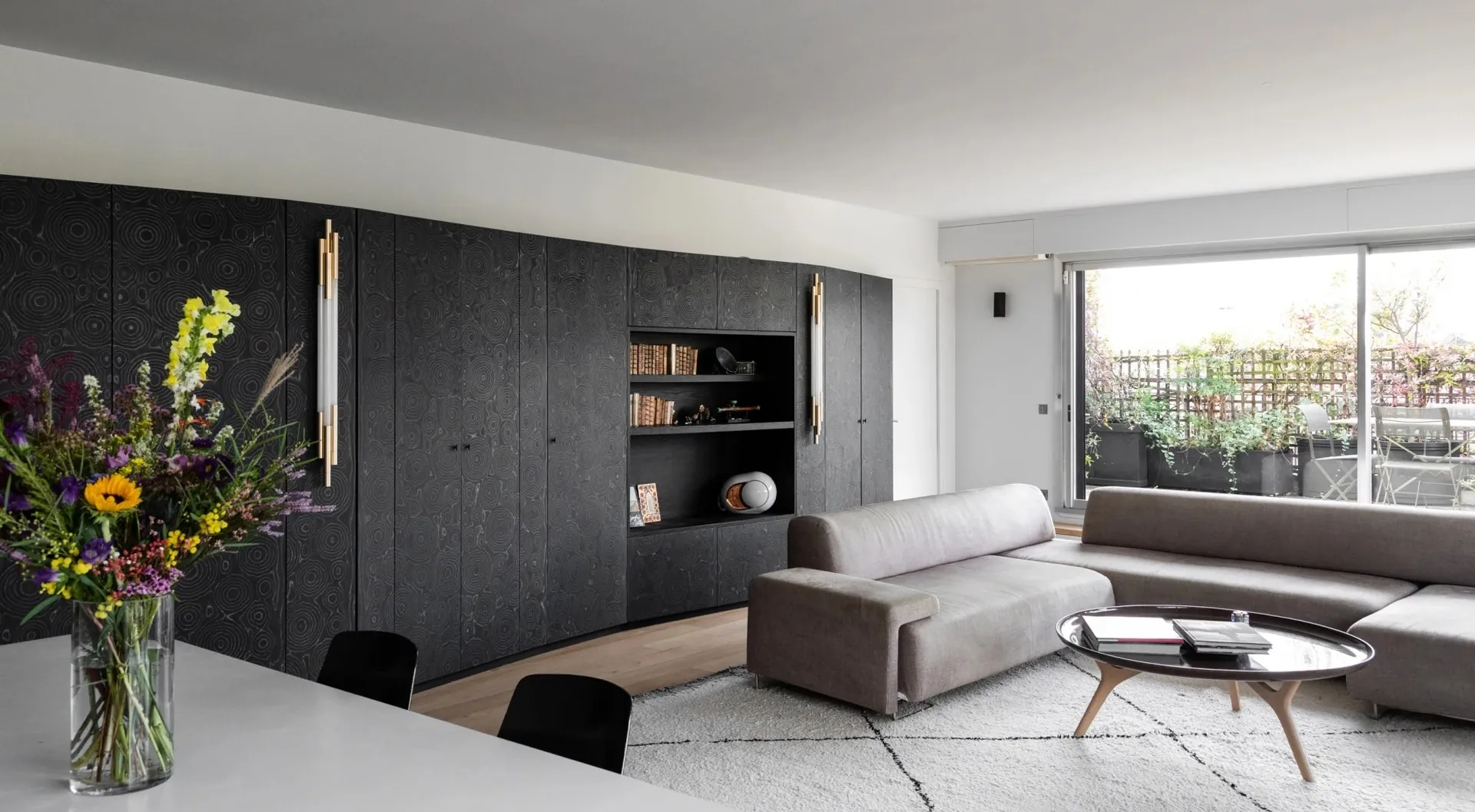
Alpi in Barcelona
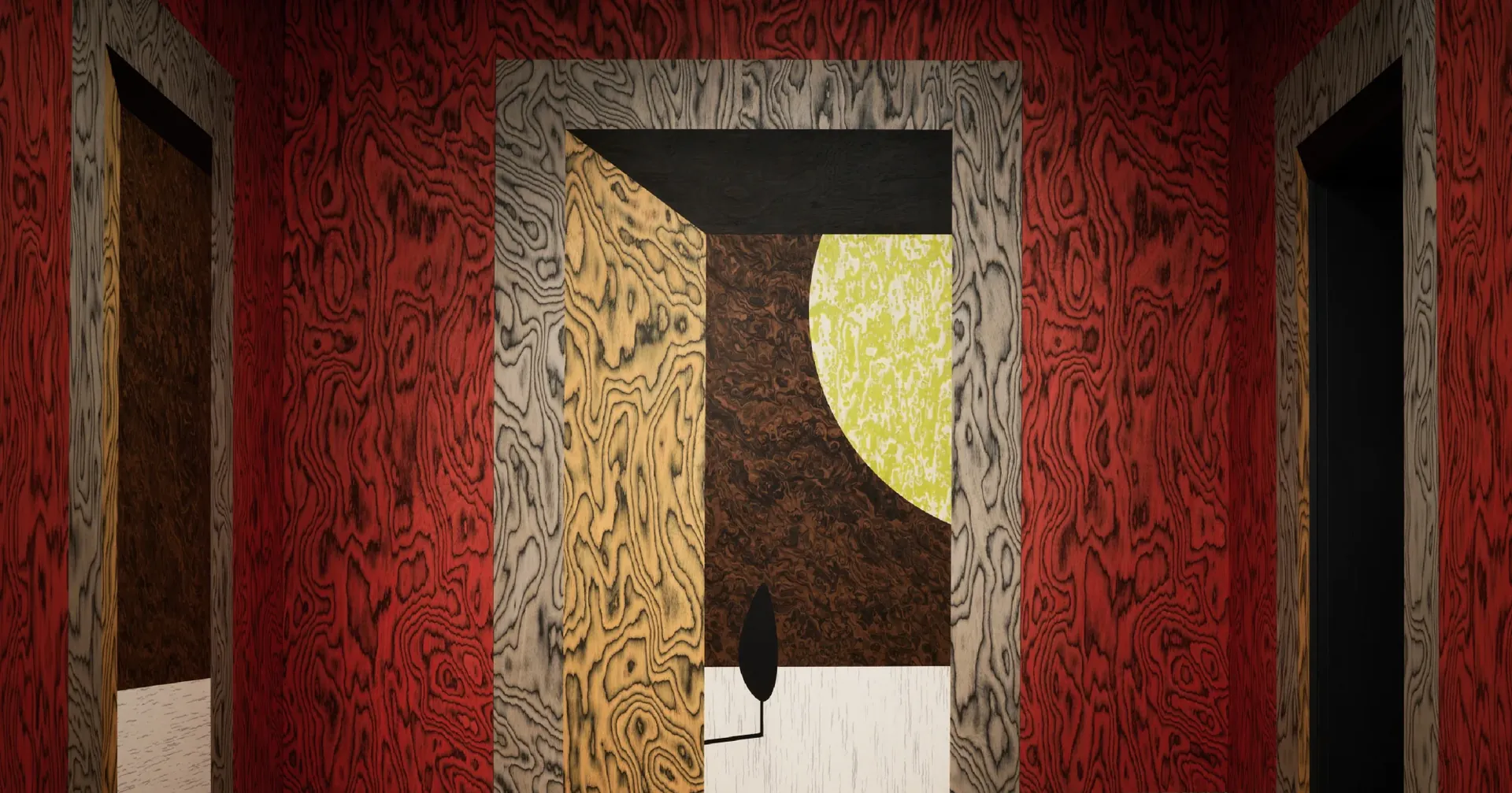
Alpi remakes veneer: it slices wood into sheets, dyes them and presses them into a new log. That way it can follow a designer’s sketch, or make ebony-look veneer when real ebony is hard to get.
How Alpi veneer is made
Slicing
Poplar, lime or ayous is sliced into thin sheets.
Dyeing
The sheets are dip-dyed.
Pressing
The sheets are glued and pressed into a new log: a new material.
Alpi has worked with wood in Modigliana, in the province of Forlì-Cesena, since 1919. Pietro Alpi founded the company; his grandson Vittorio runs it today. The factory has made ALPIlignum composite veneer since 1961.
Who designs the veneer
Ettore Sottsass, Patricia Urquiola, Kengo Kuma and the Campana brothers have designed patterns for Alpi. Piero Lissoni has been art director since 2015.
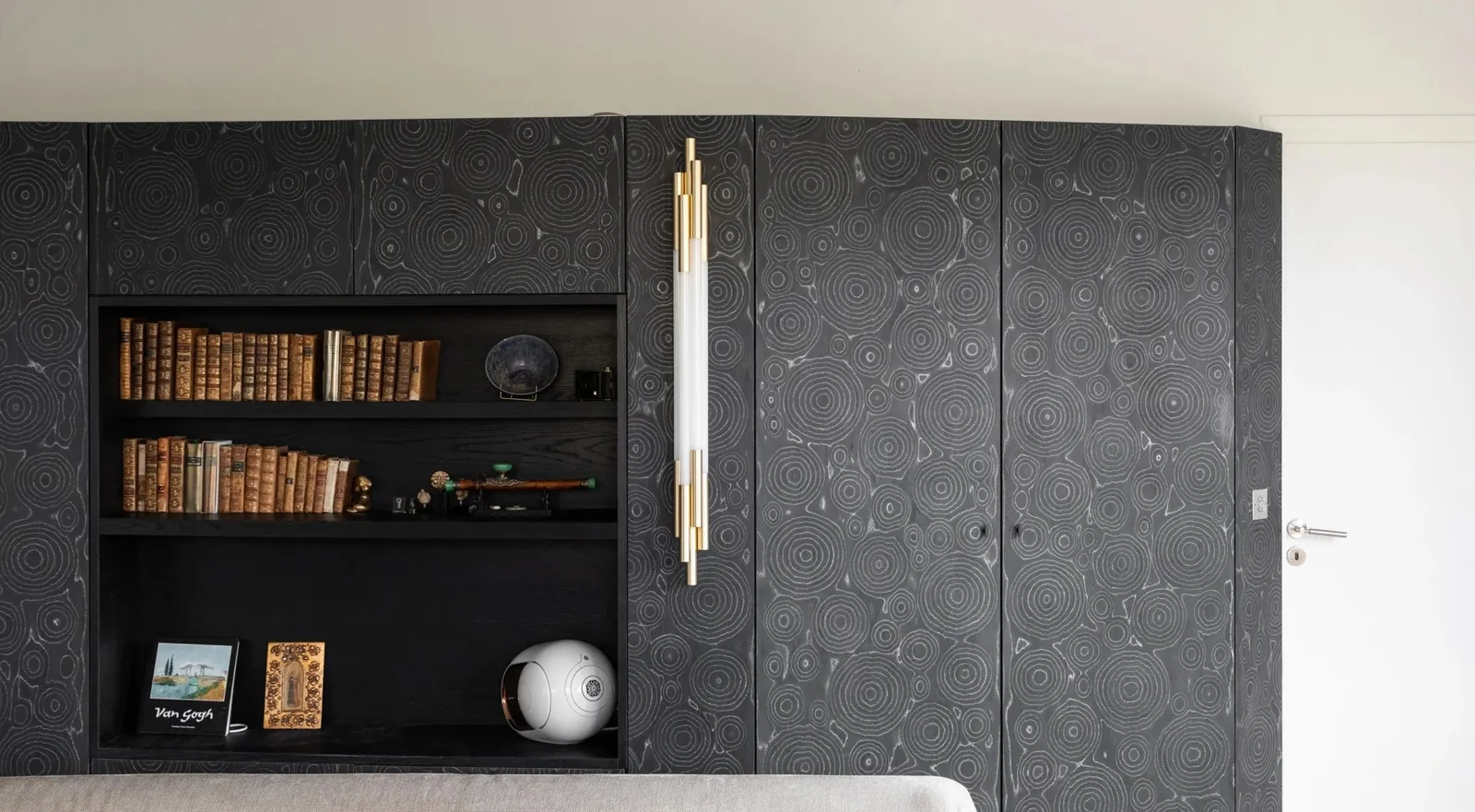
Ebony, teak and rosewood-look veneer
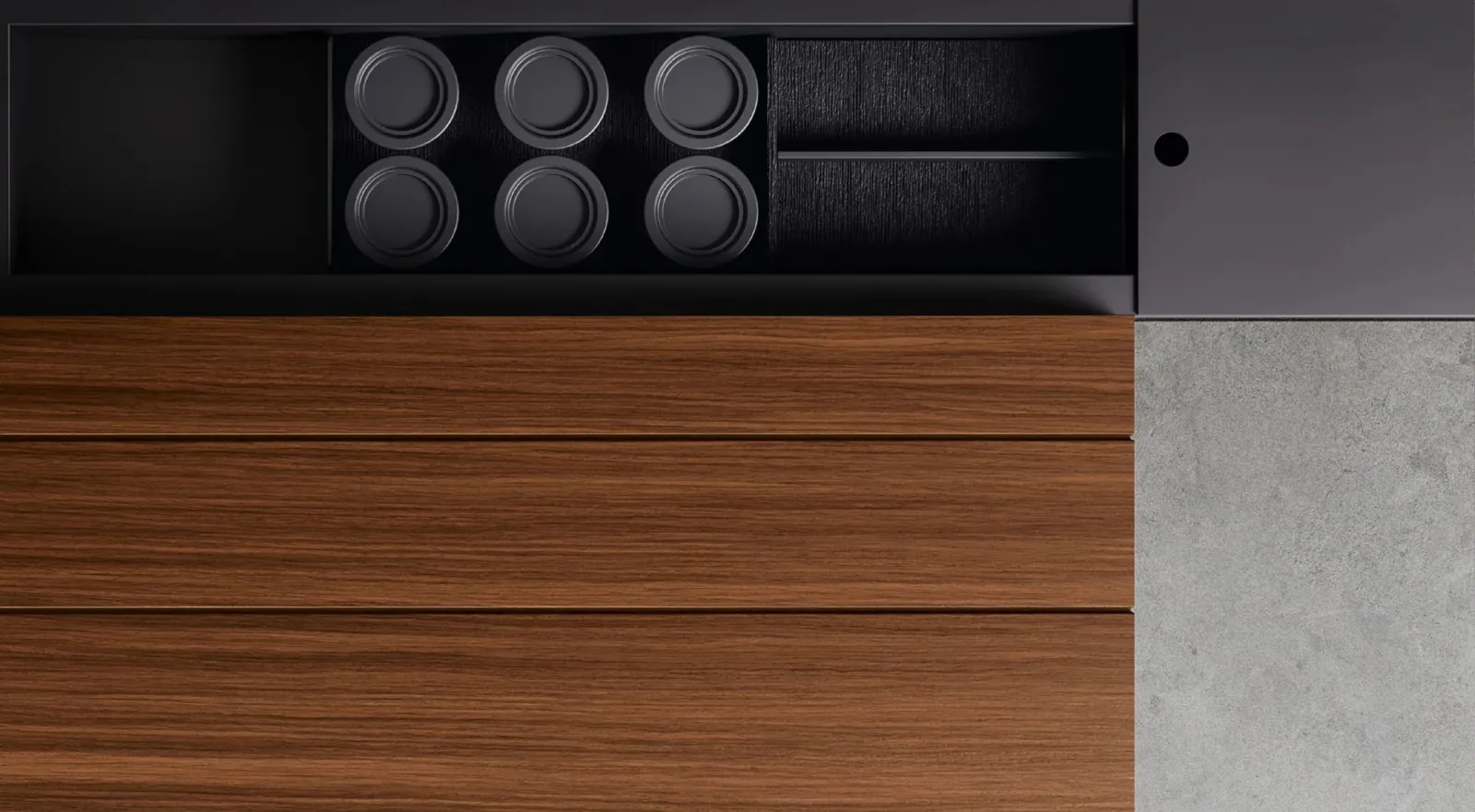
Legacy veneer reproduces woods that are hard or illegal to harvest. Piero Lissoni used it on the Boffi Case 5.0 kitchen shown in the photo.
- EBONY
- TEAK
- ROSEWOOD
Alpi holds licences for 500,000 hectares of forest in Africa: the group sources the wood for its veneer itself.
Questions about Alpi
How is composite veneer different from ordinary veneer?
It’s rebuilt: sheets of poplar, lime or ayous are dyed, glued and pressed into a new log. The factory sets the pattern, not the tree.
Where is Alpi veneer used?
Furniture and the interiors of hotels, shops and public buildings. Car and yacht makers use it too.
Can doors and walls share the same veneer?
We match veneer to doors and wall panels using samples, which we’ll show you in the showroom.
What’s the lead time for Alpi veneer?
It depends on the pattern and quantity. We’ll confirm it with the price.
Often ordered with Alpi veneer



We’ll show you Alpi veneer samples
Book a visit