Materials
Shade and calibre: why you can’t order more tiles later
Once a batch is gone, the shade never comes back. How much to keep in reserve and what to do if it still runs out.
August 1, 2026
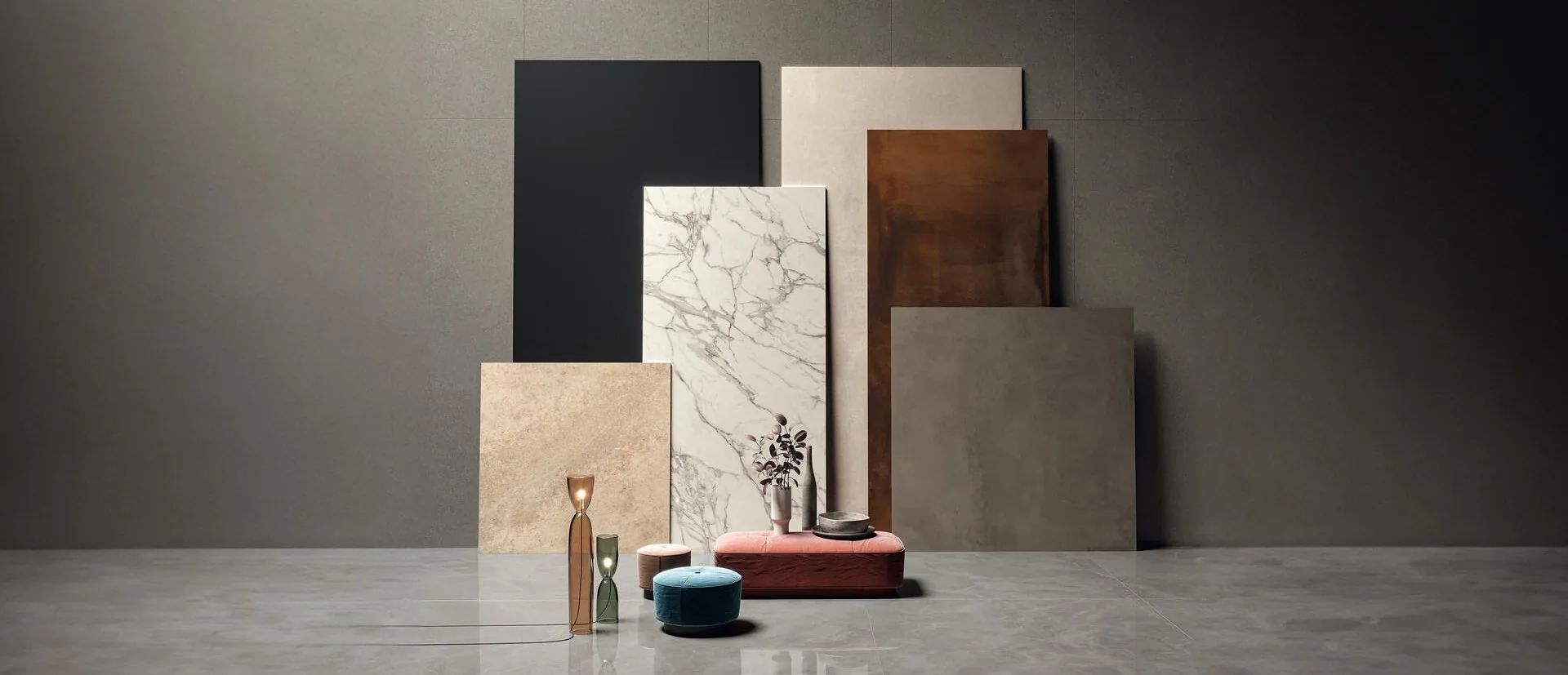
Tiles are ordered by the area from the drawings plus ten per cent. A month later the tiler makes a bad cut, a box runs short and another one is ordered. It arrives — and stays in the cupboard, because it can no longer be laid next to the first.
What shade and calibre are
Both are printed on the side of every box. People rarely read them until it is too late.
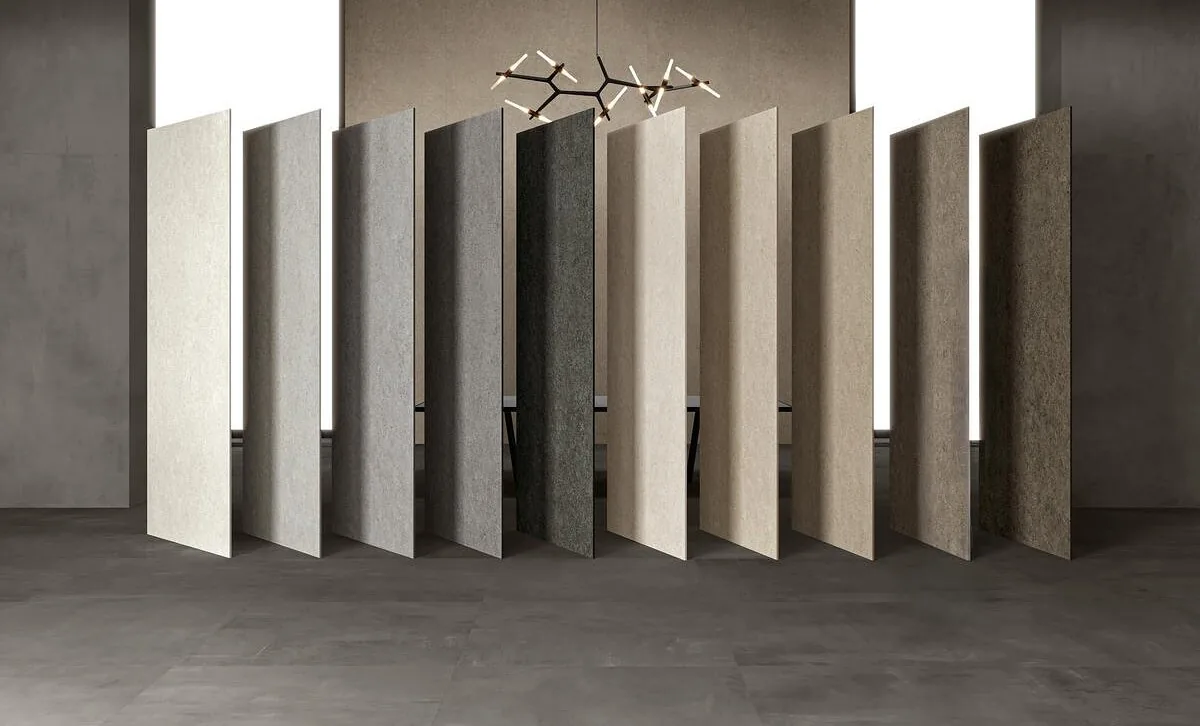
- 01 Shade Firing happens in batches, and the colour drifts from batch to batch. The factory sorts the tiles by shade and prints a code on the box. Neighbouring shades laid side by side read as a stain on the wall.
- 02 Calibre The actual size after firing. A 1200×600 tile comes out at 1198 one time and 1202 the next. Different calibres in one floor give a wandering joint.
- 03 Batch The production run number. Shade and calibre only match within one batch — this is the one line worth writing into the order itself.
- 04 Product code Collections last three or four years. After a year the code can still be supplied; after three it is discontinued and a replacement has to be hunted through warehouses.
How much to keep in reserve
Ten per cent is a figure from builders’ quotes, and on small formats it works. With large formats the maths is different: one 3200×1600 slab costs as much as twenty square metres of small tile, and “plus ten per cent” turns into a spare slab at fifteen hundred euros. Here we count the cutting piece by piece and add one slab per project — not a percentage, a slab.
What saves you from redoing the job is one spare box sitting on a shelf for three years.
What to copy from the delivery note
| Parameter | Where to look | If it doesn’t match | What to do |
|---|---|---|---|
| Shade | code on the side | a stain on the wall | order within one batch |
| Calibre | code on the side | the joint wanders | cut to one calibre |
| Batch | delivery note | nothing is guaranteed | write the number into the order |
| Product code | delivery note | the collection gets discontinued | keep a spare box |
If it does run short
Call us first, not a marketplace. Factories keep the tail ends of batches, and for the first six months the chances of finding your shade are good. After that there are two options: take the neighbouring shade and move it into a separate area — a niche, a store cupboard, a bathroom — or relay the whole section.
And the cheapest thing you can do right now: photograph the side of the box before it is laid. Thirty seconds against a week of searching a year later.
From the article
The brands in question
The porcelain from the article — four factories we work with directly.

Slabs up to 3200×1600, batches kept for six months
See →

Small formats and rectified edges
See →

Stocked in Spain, dispatch from a week
See →

Stone and concrete textures
See →
Next
Read next
Bring a photo of the box
We’ll identify the product code, check what is left of the batch at the factory and work out the reserve for your area.
Or write to us: info@betton.es · +34 614 805 325