Materials
How to choose a kitchen surface
A knife, boiling water, wine and grease — a worktop gets all of it every day. Four materials, and the weak spot of each.
July 21, 2026
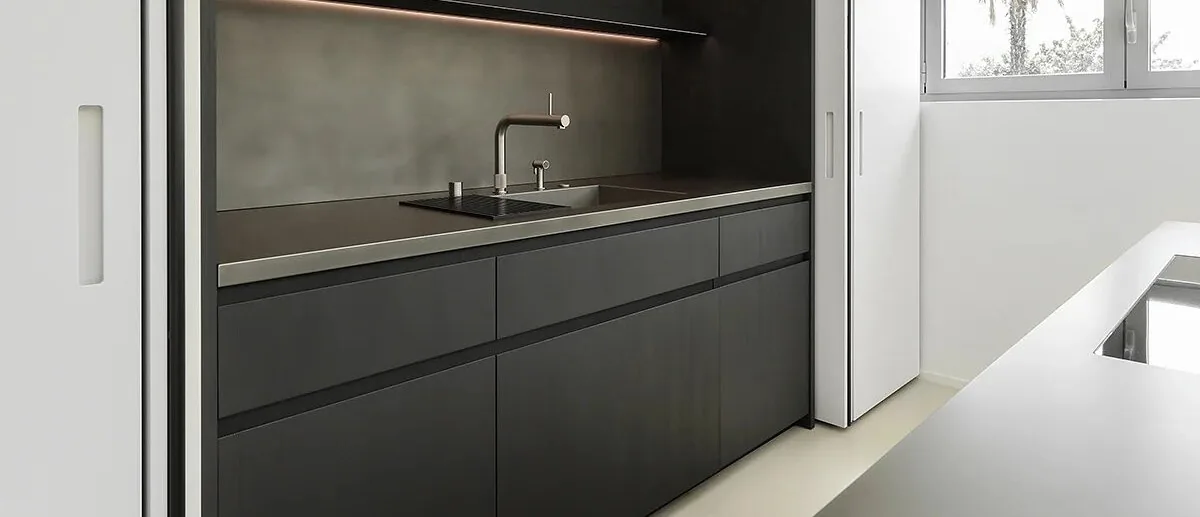
In a kitchen the finish is a tool. A pan comes off the hob and goes straight onto the worktop. Bread gets cut without a board. Wine is spilled and wiped half an hour later. The splashback stands in steam and grease all day. So the choice doesn’t start with a photo in a catalogue — it starts with what you actually do in the kitchen every day.
Four materials and their limits
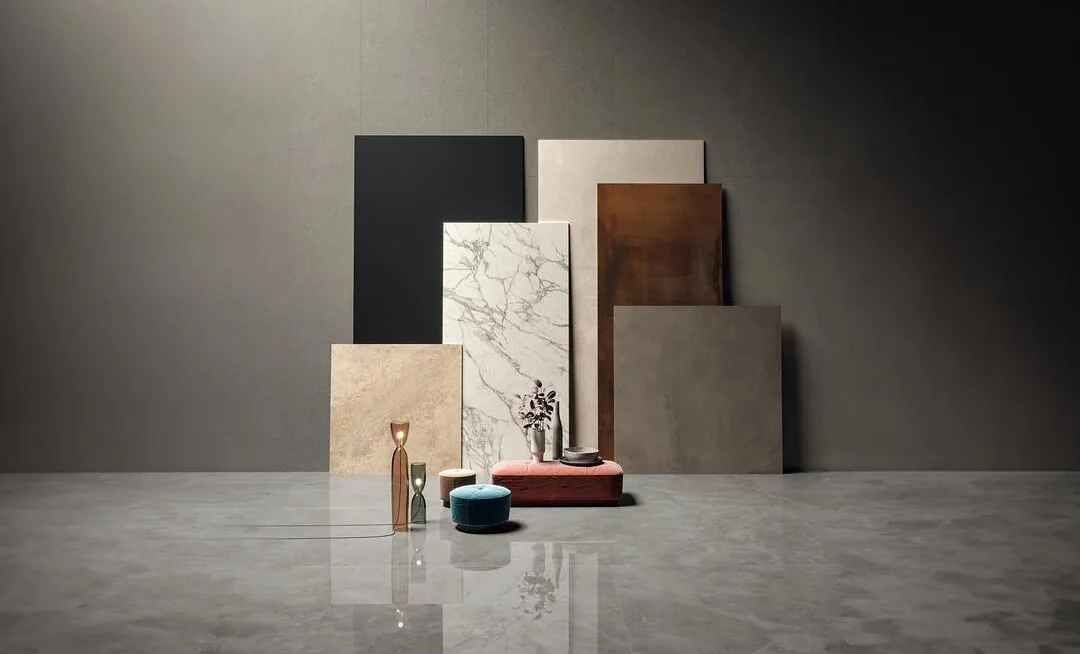
We keep all four in the showroom. We ask you to do one thing: lay them side by side under the light you will have at home and run a knife across each of them. After that the conversation about materials takes five minutes.
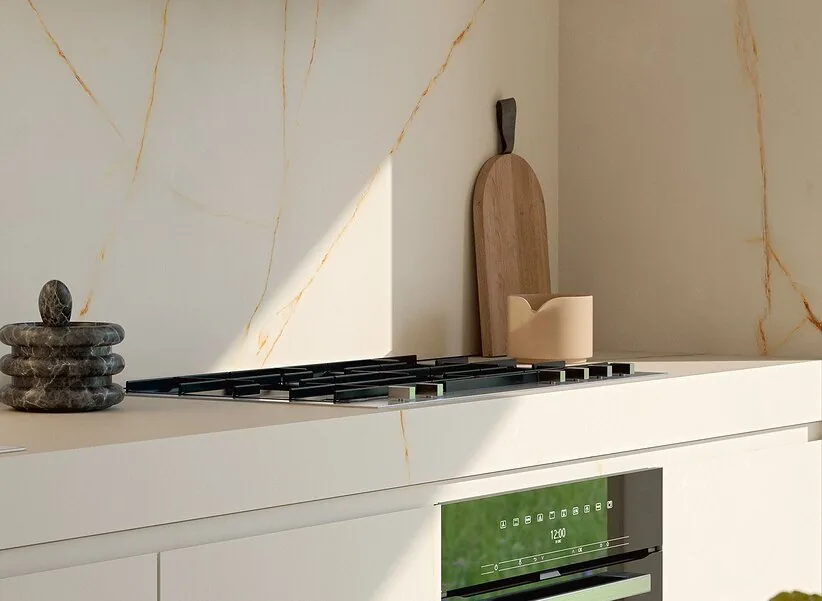
- 01 Porcelain Takes a pan straight off the hob, doesn’t absorb wine, cuts to any size. Its weak spot is the joints and the edge: sloppy work shows at once.
- 02 Quartz composite Warm to the touch, and scratches polish out. Heat is another matter: a pan from the hob leaves a mark, and the mark stays.
- 03 Natural stone No two slabs are the same — you pick the veining in person. Marble darkens from wine and oil; granite puts up with more.
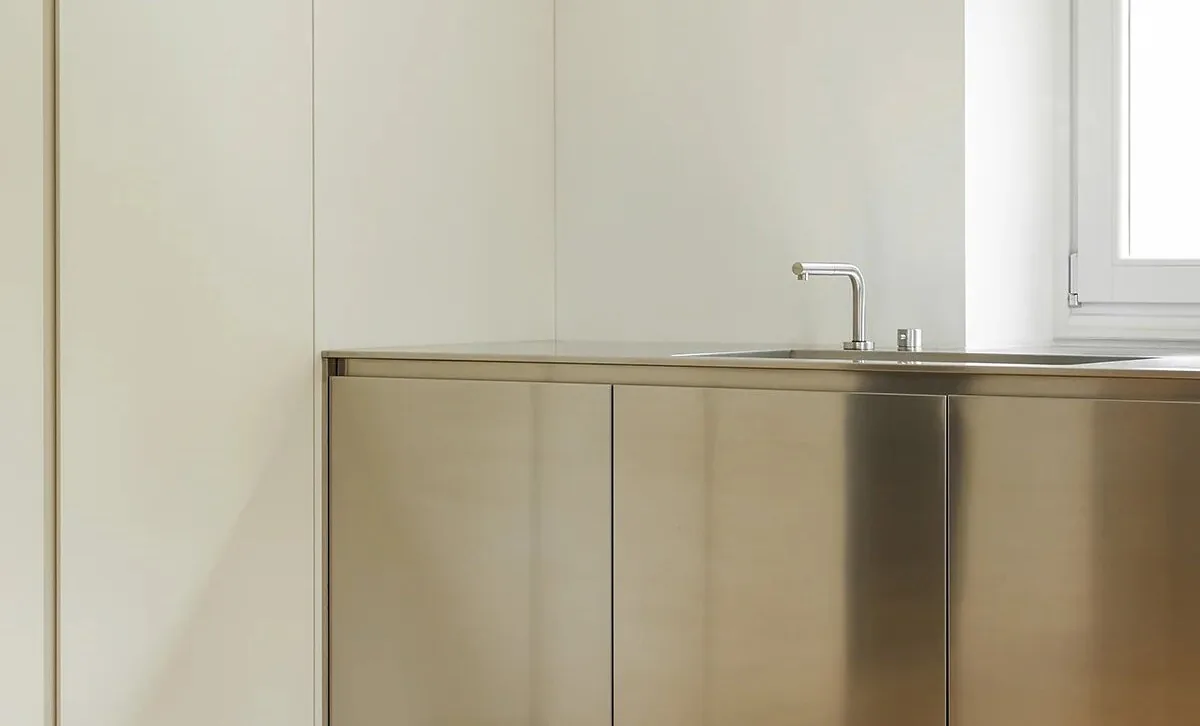
- 04 Stainless steel This is how restaurant kitchens are built: steel is afraid of nothing. It does keep fingerprints, and within the first month it picks up a web of fine scratches.
Thickness and edge matter more than the material
The same slab at 6 mm and at 12 mm is two different things. The thin one reads as a sheet, the thick one as a piece of stone. Islands are usually done in 20 mm, with the edge built up to 40: an island should look heavy. On a wall it is the other way round — the thinner the slab, the bigger the sheet, the fewer the joints and the easier it is to work around sockets.
The argument about materials ends the second someone runs a knife across a sample. After that we only talk about thickness and edges.
The same thing as a table
| Material | Heat | Stains | Scratches |
|---|---|---|---|
| Porcelain | takes it | non-absorbent | highly resistant |
| Quartz | not heat-proof | non-absorbent | medium |
| Marble | takes it | absorbs | low |
| Steel | takes it | non-absorbent | low |
What to choose
If you cook every day and there are children in the house, take porcelain. If you want a warm surface and don’t mind polishing it every couple of years, take quartz. Take marble with your eyes open: it ages beautifully, but wine marks will stay, and that is not a defect. Steel is for people who like restaurant kitchens and don’t count scratches as damage.
We have 40×40 cm samples to hand. Bring the floor plan and we’ll lay them out over your square metres and work out the cutting.
From the article
The brands in question
The porcelain from the article — these four collections.

Porcelain up to 3 m, 3–20 mm thick
See →

3200×1600 slabs and stone-look textures
See →

Marble and travertine collections
See →

Colour and relief for wall panels
See →
Next
Read next
Try them with a knife yourself
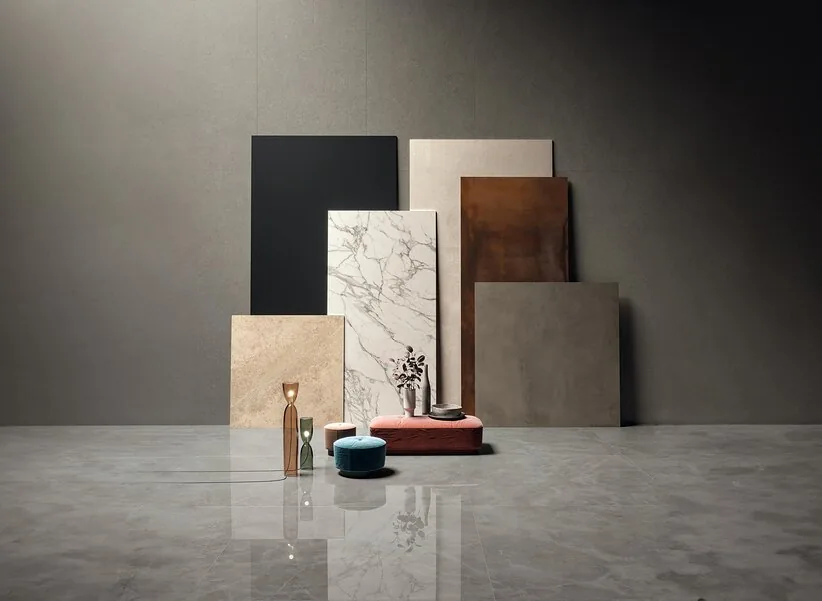
The four materials from the article are in our showroom. Bring the floor plan: we’ll compare them under your light and work out the cutting.
Or write to us: info@betton.es · +34 614 805 325