Journal · Brands
How veneer is cut: a visit to Alpi
Why the grain repeats from panel to panel, what that takes in production and when it’s worth paying for.
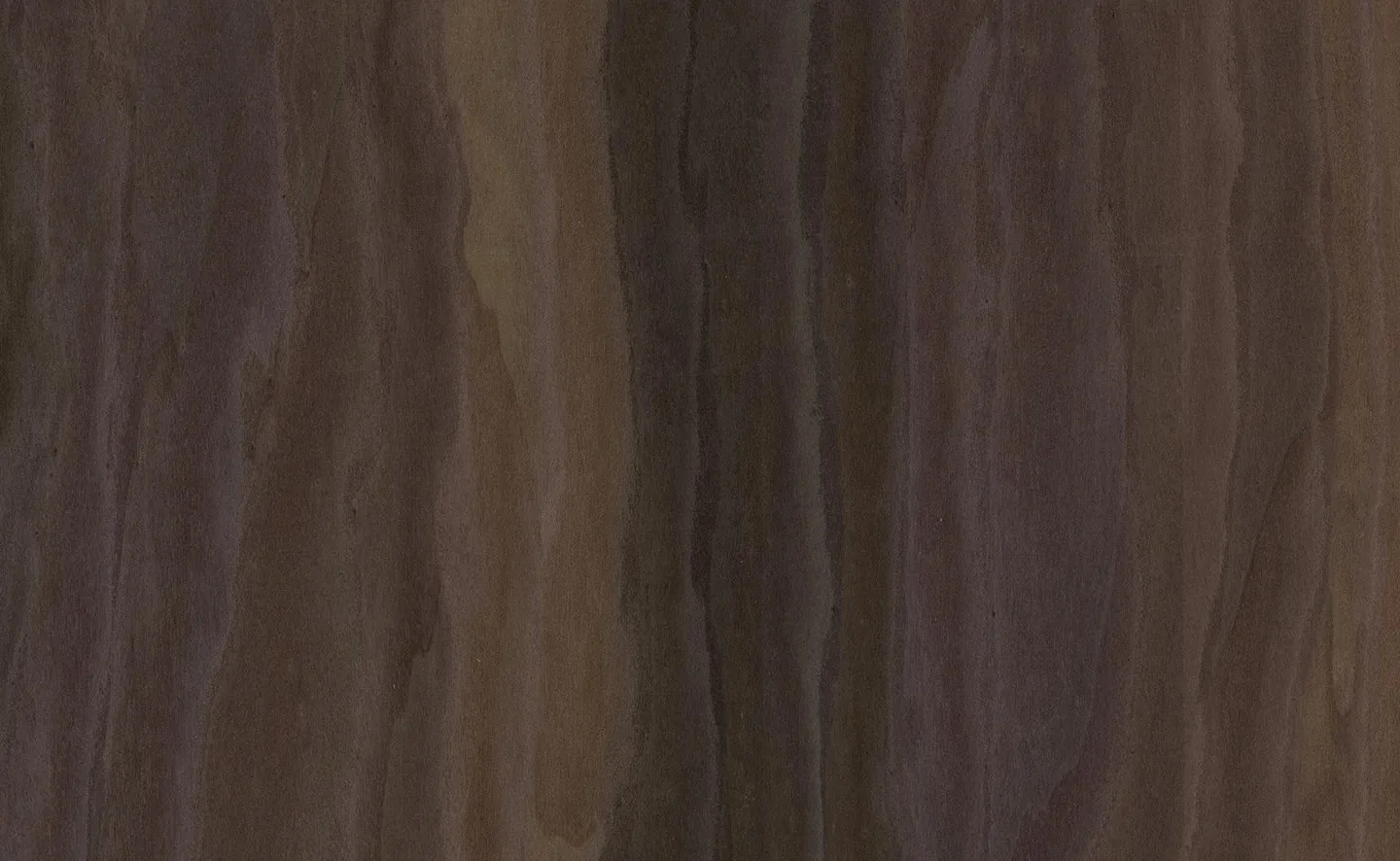
With ordinary veneer, two neighbouring panels never match: the tree grew as it pleased. With Alpi they all match — and that’s not image editing but a different way of making the material. We went to Modigliana to see how it works.
What happens at the factory
Here the wood is first taken apart down to the sheet, then put back together — like a construction kit.
- 01 Peeling An ayous or poplar log is unrolled into a continuous ribbon a fraction of a millimetre thick. At this stage the natural grain disappears completely.
- 02 Dyeing The sheets are dyed right through in autoclaves, not just on the surface. So sanding doesn’t change the colour, and the edge looks the same as the face.
- 03 Building the block The dyed sheets are stacked into a block weighing several tonnes to a set pattern — and that pattern decides the future grain: oak, walnut, zebrano or a geometry that doesn’t exist in nature.
- 04 Slicing again The block is sliced across. Each new sheet repeats the one before — which is why one panel matches the next.
When it’s worth paying for
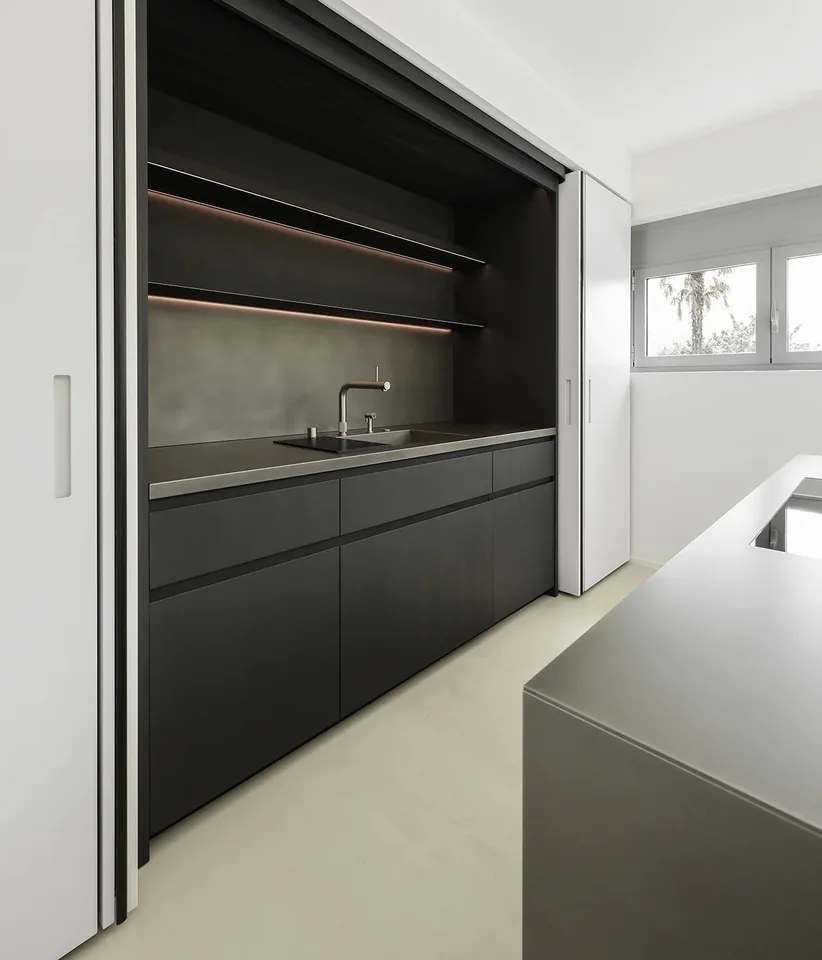
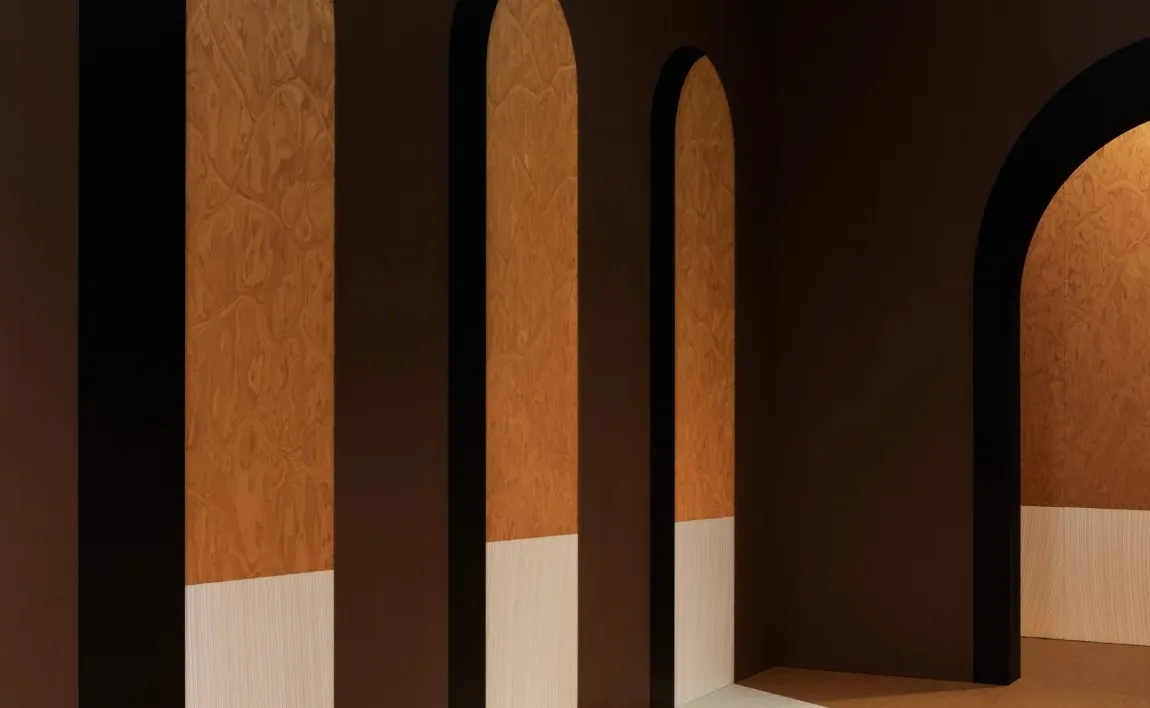
The answer is simple: when there are lots of surfaces and they sit side by side. A kitchen along a whole wall, a dressing room, concealed wardrobes, wall panelling from door to door. Over an area like that, the variation of natural veneer reads as a mess, and repeatability as expensive joinery. On a single cabinet the difference won’t pay off.
Natural veneer is a lottery with every panel. Reconstituted veneer is an agreement on how it will all look.
How it differs from natural veneer
| Parameter | Natural | Alpi | What you get |
|---|---|---|---|
| Grain | Naturalunique to each panel | Alpirepeats | What you getinvisible joins |
| Colour | Naturalvaries by batch | Alpiconsistent | What you geteasy to top up |
| Knots | Naturalyes | Alpinone | What you getless waste |
| Price | Naturaldepends on species | Alpiabove average | What you getpays off over large areas |
What to ask when ordering
The product code, the grain direction and the matching pattern. Veneer arrives in sheets and the joiner glues it onto the board — how the sheets are laid out decides whether the grain carries on across a joint or breaks off. It is a separate line in the joinery order, and it has to be spelled out.
We keep samples of every popular product code, including lacquer and oil finish swatches — after finishing, the colour differs from the raw sheet more than you’d think.
Brands from the article
 Reconstituted veneer, 200+ product codes
 Veneer-look wall coverings
 Murals and textures
 Metal curtains and screens
See the block in person
Book a visit